
Bathroom Remodeling
How Long Does a Bathroom Remodel Take? The Real Timeline
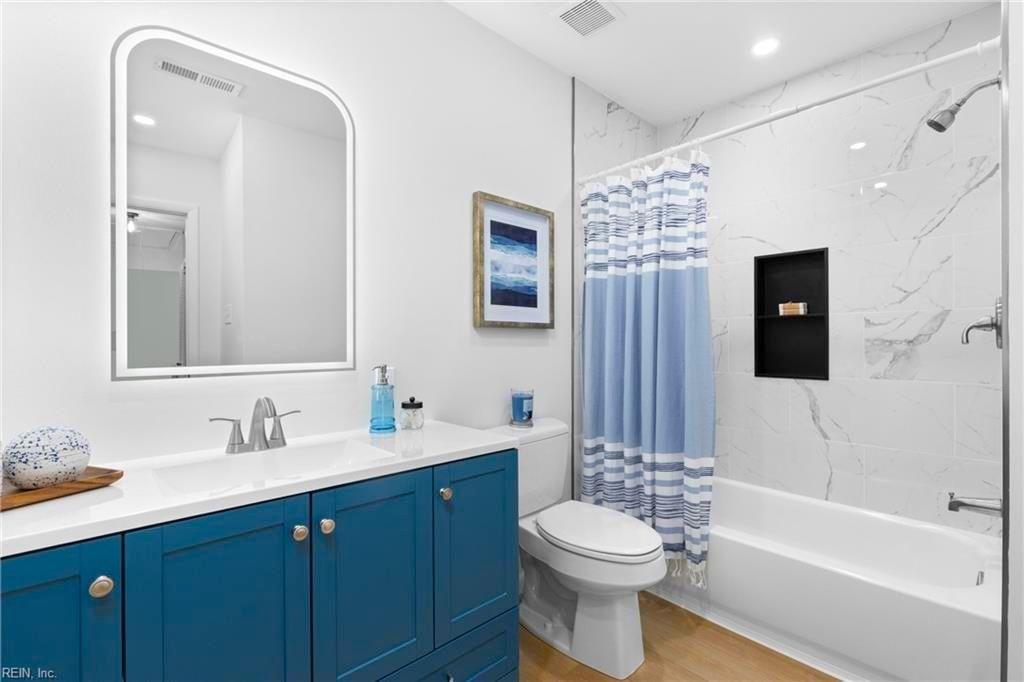
A full bathroom remodel is usually ten to fifteen working days of actual labor. Spread across inspections, cure times, and one trade at a time, that lands at four to eight weeks of construction. Add selections, ordering, and permitting on the front end and the whole project runs two to four months from the day you sign.
Both of those numbers are true, and the gap between them is where almost every frustrated homeowner ends up. Somebody told them four weeks. They planned for four weeks. Four weeks came and went while a vanity sat on a truck in Georgia.
So here's the version with the front end included, and with the part that actually sets your start date: what the building department in your specific city does, and how fast.
The Short Answer
| Scope | Labor on site | Construction window | Whole project |
|---|---|---|---|
| Cosmetic refresh — paint, vanity, toilet, mirror, light, same locations | 3–5 days | 1–2 weeks | 2–4 weeks |
| Standard pull-and-replace — tub/shower swap, tile, vanity, floor, nothing moves | 8–12 days | 3–5 weeks | 6–10 weeks |
| Full gut with plumbing moved — tub to walk-in shower, relocated drain, new layout | 12–18 days | 5–8 weeks | 2–4 months |
| Gut plus structural — wall removed, bathroom expanded, window added | 18–25 days | 7–12 weeks | 3–5 months |
Those are the ranges we quote on our own jobs in Virginia Beach, Chesapeake, Norfolk, and Portsmouth. They're not a promise about your bathroom, because nobody can schedule a bathroom honestly before seeing what's behind the wall.
The single most useful thing in this table is the gap between column two and column four. Four days of work can take four weeks to finish. That isn't padding and it isn't a slow crew.
Why Four Weeks and Four Months Are Both Honest Answers
There are two clocks running on your bathroom, and contractors and homeowners habitually quote different ones.
The labor clock counts days a crew is in your house doing work. For a standard bathroom that's around ten days. It's the number a contractor has in his head, because it's the number that prices the job.
The calendar clock counts days from the contract to the day you can take a shower. It's two to four times longer, and it's the number you actually live in.
Four things stretch the first into the second, and only one of them is anybody's fault:
- Sequencing. A bathroom is a small room. Two trades cannot stand in it at once. The tile setter cannot start until the plumber is out, the plumber cannot finish until the inspector has been, and the painter cannot come until the tile is grouted. Everybody waits on somebody.
- Inspection holds. Virginia requires plumbing, electrical and mechanical work to be inspected before it gets covered up. Until that inspection is approved, the wall stays open. If you request it at noon in Virginia Beach, your inspection is tomorrow at the earliest.
- Cure and dry time. Waterproofing, mortar and grout all have to set before the next step. Those hold times are printed on the bag and they are not negotiable. A shower that gets grouted Friday and used Saturday is a callback waiting to happen.
- Lead times. Stock vanities and basic subway tile are usually sitting in a warehouse. Custom vanities, slab tops, specialty tile and shower glass are not. Shower glass in particular gets templated after the tile is finished, which means it is ordered near the end of the job and then you wait.
Notice that three of those four have nothing to do with how hard anyone is working. They're physics, code, and the supply chain.
The Weeks Nobody Counts: Everything Before Demo Day
Every bathroom-timeline article you'll find starts at Week 1 and calls Week 1 demolition day. In real life, by the time demo happens you are usually four to eight weeks into the project.
Here's the front end, in the order it actually happens:
- Site visit and written estimate. We measure, look at the existing plumbing and panel, and put a line-item estimate together. On our jobs that's typically three to ten business days after the visit, which is the same window we publish on our process page.
- Contract and scheduling. One to three weeks, longer when permits are involved, and partly a question of where you land on the production calendar.
- Selections. One to four weeks, and this is where projects actually stall. Tile, vanity, top, faucet, shower valve, floor, paint, trim, hardware, mirror, lighting, exhaust fan. Every one is a decision, and the job cannot be ordered until the last one is made.
- Ordering and delivery. Anything special-order needs to be in hand, or at least confirmed in transit, before demolition. Starting demo while the tile is still unordered is how a family ends up without a bathroom for six weeks.
- Permit, if the work needs one. Days or weeks, entirely depending on which city you're in. See the next section, because this is the part that varies most and the part nobody writes about.
If you want the project to go fast, this is the only section you control. Decide the tile early. A homeowner who has every selection made before the contract is signed can often cut a month off the calendar without anyone swinging a hammer faster.
One honest warning: a contractor who's willing to start demo before your materials are confirmed is not doing you a favor. He's starting the clock on your inconvenience to secure the job.
What the Construction Actually Looks Like
For a standard full bathroom with the plumbing staying roughly where it is, the sequence runs like this. Day counts are working days, and the waits in between are where the calendar goes.
- Protection and demo — 1 to 2 days. Floor protection, dust containment, and the old bathroom comes out. This is also when surprises surface: rot behind the tub surround, a failing cast iron drain, wiring that predates ground fault protection.
- Repairs you didn't plan for — 0 to 3 days. On older Norfolk and Portsmouth housing stock this is frequently not zero. Subfloor around a toilet flange that's been weeping for a decade is the most common one we find.
- Plumbing and electrical rough-in — 2 to 3 days. New supply and drain lines, shower valve, vent fan wiring, GFCI circuits.
- Rough-in inspection — the first hold. Walls stay open until this is approved. Best case next business day, and in Virginia Beach same-day if it's requested early enough.
- Framing and insulation inspections — 1 day plus holds. These come after the trade rough-ins have passed, not before.
- Close the walls, waterproof the shower — 2 to 3 days. Cement board or a bonded membrane system, then the pan. There's a required water test here that catches people out — covered in the next section.
- Tile — 2 to 4 days, plus cure. Set, then let the mortar cure before grouting, then let the grout cure before the shower gets wet. The hold times are on the product and they're the reason tile weeks look slow.
- Vanity, top, toilet, trim, paint — 2 to 3 days. Plus whatever the paint needs between coats.
- Shower glass — 1 day of install, 1 to 3 weeks of waiting. Templated against the finished tile, then fabricated. On a lot of jobs this is the very last thing and the only thing left.
- Final inspections and walkthrough — 1 day plus holds. Trade finals first, then the building final after all trades are signed off, then our punch list with you.
Add it up and you get roughly ten to fifteen days of work across five to eight weeks. Nothing in that list is padding.
If you're still deciding between a tub and a walk-in shower, decide it before this sequence starts, not during — our walk-in shower vs. bathtub comparison walks through that choice, and changing your mind at the rough-in stage means pulling plumbing back out.
Permit and Inspection Timing in Our Four Cities
This is the section the national guides can't write, and it's the one that actually moves your start date.
Hampton Roads is four separate building departments with four different front doors. The same bathroom, permitted in Chesapeake versus Norfolk, can start weeks apart. Here's what each city publishes:
| Permit for a small alteration | Requesting an inspection | Apply online? | |
|---|---|---|---|
| Chesapeake | Plan reviews under 500 sq ft are handled as a walk-through. The city's own language: the inspector "will normally review the plans and issue the permit at the time of submission." | By 11:59 p.m. the business day before, for the next business day | Yes — eBUILD, or the Express Permit workstation at the counter |
| Virginia Beach | Counter review is available for alterations with a work area of 500 sq ft or less and a plan set of five pages or fewer. Larger online submissions are a different queue, with a published initial review of 15–45 business days. | Before 8 a.m. for a same-day inspection (the city advises 7 a.m.), and up to five working days ahead | Yes — Accela Citizen Access |
| Norfolk | No stated review window. Norfolk publishes a live plan review queue with an anticipated review date per project instead. | Before midnight for next-day | Yes — E-Permit Portal |
| Portsmouth | No published turnaround for residential alterations. | Online through POPS once a permit is issued; no published cutoff | Not yet. POPS still lists applying for permits as "coming soon," so applications are in person |
Three things worth pulling out of that table.
Chesapeake is the fastest front door in Hampton Roads for a bathroom. A walk-through review on a sub-500-square-foot alteration means the permit can be in hand the day it's submitted. For a bathroom remodel, that's as good as it gets.
Virginia Beach rewards an early phone call. The same-day inspection window closes at 8 a.m. A crew that calls at nine has lost the day. That one habit is worth several days across a job.
Portsmouth needs a trip downtown. Not a problem, just something to build into the schedule rather than discover on a Tuesday.
Statewide, there's a useful backstop: the Virginia building code provides that where the building official can't make a requested inspection within two working days, reports from an approved third party have to be accepted for review. It isn't a guarantee your inspection happens in two days, but it does mean a department backlog can't hold your job open indefinitely.
Norfolk also publishes a list of twelve holidays with no inspections at all, including both Thanksgiving Thursday and the Friday after. If your rough-in lands that week, plan for it.
Requirements and timeframes change, and the published pages aren't all dated. Call your building department, or let us do it — confirming the current window for your address is part of the job.
The Inspection Order That Sets Your Schedule
Homeowners generally assume framing gets inspected first because the framing goes up first. It's the other way around, and the order matters because each inspection is a hold.
Chesapeake publishes the clearest sequence of the four cities, and it reads:
- Plumbing, electrical and mechanical rough-ins — "before covering the wall"
- Framing — and the city states plainly that it "must be performed after the trades rough-in inspections have been approved"
- Insulation — after the framing inspection
- Trade finals — electrical, mechanical, gas, plumbing
- Building final — "after all the trades have received final approval"
The Virginia building code sets the same principle statewide: plumbing, electrical and mechanical systems get inspected before concealment, and where something fails it has to be corrected and reinspected before any work proceeds that would cover the defect. Norfolk folds the trade rough-ins into a combined frame inspection and states the rule bluntly — work shall not proceed until the inspection has been approved.
And the one that surprises nearly everybody: the shower liner test.
Before tile goes on, the shower floor has to hold water. Chesapeake's own certification form spells out the requirement: fill the floor and receptor with water to a depth of not less than two inches measured at the threshold, hold it for not less than fifteen minutes, and show no evidence of leakage. Build a temporary dam if the threshold isn't two inches.
Fifteen minutes of water is the cheapest insurance in the whole project. A shower pan that leaks behind finished tile means the tile comes off. We do this test on every shower we build, permit or no permit, and on a Hampton Roads crawl-space home we'd rather find a pinhole on a Tuesday than find a soft subfloor in two years.
What Actually Makes a Bathroom Run Long Here
After seven years of these in Hampton Roads, the delays cluster into a short list. None of them are exotic.
- Selections made late. Far and away number one. The tile decision holds the whole order.
- Moving the plumbing. The moment a drain or vent relocates, you've added a rough-in, a permit, and an inspection hold. Converting a tub to a walk-in shower usually means exactly that.
- What's under the toilet. A flange that's been leaking slowly rots the subfloor around it, and you don't find out until the toilet is off the floor. On older housing stock this is routine, not rare.
- Humidity and dry times. Norfolk runs high humidity most of the year. Paint, mortar, grout and joint compound all dry slower in a damp, closed-up bathroom with the exhaust fan not yet wired. In August we run a fan and sometimes a dehumidifier because otherwise the schedule quietly slips two days.
- Shower glass at the end. Templated after tile, then fabricated. It's frequently the only thing standing between "basically done" and done.
- Flood zone and historic district work. Virginia's code lets the building official require a permit for otherwise-exempt work in a special flood hazard area or a locally designated historic district. Across Virginia Beach, Norfolk and Portsmouth that's a real possibility rather than a footnote — and if flood exposure is a factor for your house, it should shape your flooring choice too.
- Holiday weeks. Inspectors don't work them, suppliers slow down, and a two-day hold becomes a week.
When You Don't Need a Permit at All
Plenty of bathroom work in Virginia is permit-exempt, and knowing which side of the line you're on is worth two to four weeks.
Under the Virginia building code's ordinary-repairs provisions, these generally don't require a building permit:
- Replacing plumbing fixtures — tub, shower, toilet, sink — without altering the water supply, sanitary drainage, or vent system
- Installing or replacing floor finishes
- Installing or replacing cabinetry and trim, including a vanity cabinet
- Paint and wallpaper
- Replacing interior wall and ceiling finishes in a house
A permit is required once the work touches the water supply, drainage or vent system, or removes or adds a wall or partition. That's the actual line, and it's why a like-for-like tub swap and a tub-to-shower conversion are completely different projects on paper.
Two cautions. First, permit-exempt is not code-exempt — the exemption section says so in as many words, and the work still has to be built right. Second, cities draw practical lines inside that. Norfolk, for example, states that a building permit is required to remove drywall, which means gutting a tub surround can pull you into permit territory even if every fixture goes back exactly where it was.
Our guide to Virginia remodeling permits goes through the code sections and the filing process city by city. And if you want to know what the work itself costs rather than how long it takes, the Hampton Roads bathroom remodel cost guide has market ranges by tier.
Getting a Real Date for Your Bathroom
Divine Touch Home Improvements is a family-owned, veteran-owned, minority-owned remodeling contractor based in Virginia Beach, working since 2019 across Virginia Beach, Chesapeake, Norfolk, and Portsmouth, in English and Spanish.
When we quote a bathroom remodel, we give you both numbers: the working days and the calendar window, with the permit path for your city and the inspection holds written in. If a special-order item is going to decide your finish date, we'd rather tell you that at the estimate than at week five.
Request a time and we'll come walk the bathroom, or call (757) 731-4151.