Fence Services

    Fence Services in Virginia Beach, VA

    Fence installation in Virginia Beach means checking your property line and HOA rules first, then locating utilities through Virginia 811 before anyone digs. Divine Touch sets posts, lets concrete cure properly, and frames pickets, panels, or privacy boards to fit sandy soil and salt air conditions common across Hampton Roads. One crew, a written scope, and a clean yard when we leave.

    A good fence does a lot of quiet work around a home. It marks where your property begins, gives your backyard a sense of privacy, helps with pets and children, and can completely change how your outdoor space looks and feels. Divine Touch Home Improvements helps homeowners across Hampton Roads with residential fencing as part of our exterior home improvement services. Whether you are thinking about a new privacy fence, replacing a tired backyard fence, repairing storm damage, or simply tightening up sections that have aged out, our team is here to help you talk it through and plan the project. As a family-owned, veteran-owned, locally operated home improvement contractor based in Virginia Beach, we serve homeowners in Virginia Beach, Chesapeake, Norfolk, Portsmouth, and the surrounding Hampton Roads area, with bilingual service in English and Spanish.

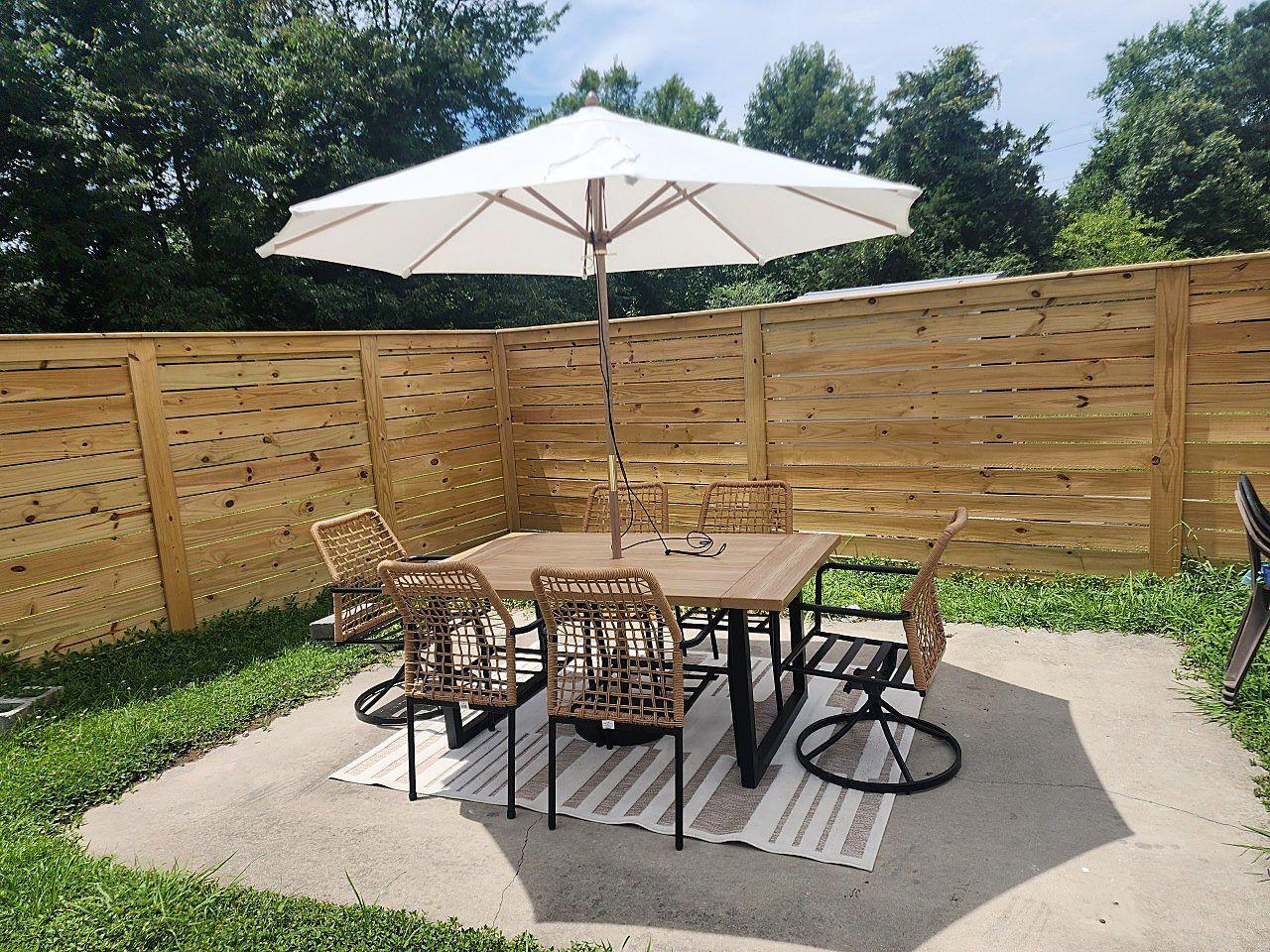
    Horizontal wood privacy fence installed around backyard patio seating area in Hampton Roads VA

    Common challenges we solve

    • You are not sure exactly where your property line runs, and the last thing you want is a new fence that has to come back out because it crossed onto a neighbor's lot.
    • Your HOA has specific rules about fence height, material, and even which side has to face the street, and you do not want to find out after the fence is built.
    • An old wood fence is leaning, rotted at the base, or missing pickets after a coastal storm, and patching it again feels like throwing money at something that will not last.
    • You have pets or young kids and need a fence that actually closes the yard, with gates that latch and no gaps a dog can squeeze through.
    • Digging in Hampton Roads sandy soil can be unpredictable, and a high water table in low-lying yards can affect how well posts set and how long concrete takes to cure.

    What's included

    • Property line review and a conversation with you about HOA architectural approval, so the fence style, height, and setback are confirmed before we schedule any digging or order material.
    • Virginia 811 utility locate request filed ahead of layout, so gas, water, cable, and electric lines are marked before a single post hole is dug anywhere on the property.
    • Post hole digging and setting, with concrete footings sized to the fence height and post spacing, and enough cure time built into the schedule before framing and pickets go on.
    • Wood, vinyl, aluminum, chain link, or composite fence installation, including picket, privacy, shadowbox, and horizontal styles, matched to your yard's slope and how it lines up with the house.
    • Gate framing and hardware installation, sized for real use, a walk gate for foot traffic and a wider double gate where a mower, trash cans, or a trailer need to pass through.
    • Fence repair and section replacement for storm damage, leaning runs, rotted posts, or sagging gates, with an honest read on whether repair or full replacement makes more sense.
    • Tear-out and haul-away of an existing fence when the old line is being replaced, including old concrete footings that would otherwise be in the way of new post locations.
    • Final walkthrough and cleanup, checking every gate swing and latch, raking out spoil piles from digging, and confirming the finished layout matches what we discussed at the start.

    How a fence project actually goes

    1. 01

      Property line, survey conversation, and HOA or city rules

      Before we schedule anything, we talk through where you believe the property line sits, whether a recent survey exists, and what your HOA or the city requires for height, material, and setback from the street or a corner lot. Getting this settled up front avoids the worst outcome in fence work, a finished fence that has to be moved.

    2. 02

      Layout and utility locate through Virginia 811

      We mark the planned fence line and file a Virginia 811 locate request, which by law has to happen before digging. Utility companies mark gas, water, cable, and electric lines with flags or paint, and we adjust post spacing around anything that cannot move. This step takes a few business days, so it is built into the schedule from the start.

    3. 03

      Post holes and setting posts, with concrete cure time

      Digging creates spoil piles of dirt next to each hole, which we keep tidy but which are visible until backfill happens. Posts go in plumb, get braced, and set with concrete sized to the fence height and soil conditions. Concrete needs real cure time before it can carry the weight of framing and pickets, so there is a pause here rather than rushing straight into the next stage.

    4. 04

      Framing and pickets or panels

      Rails go up between set posts, then pickets, panels, or privacy boards get attached level and evenly spaced. This is the stage where the yard is most open, with tools, material stacks, and an incomplete fence line, so it is worth planning where pets and kids go during the day until the fence closes the yard back up.

    5. 05

      Gates and hardware

      Gates get framed square, hung, and fitted with hardware sized for how they will actually be used, a lighter latch for a walk gate, heavier hinges and a drop rod for a double gate that needs to hold up to a mower or trailer passing through repeatedly.

    6. 06

      Cleanup and walkthrough

      We do a daily cleanup of cut-offs, packaging, and hardware scraps throughout the job, then a final pass to rake out any remaining spoil piles, check every gate swing and latch, and walk the finished fence line with you before calling it done.

    Fence materials and styles

    Pressure treated pine vs cedar

    Pressure treated pine resists rot and insects at a lower material cost and is the most common wood fence choice in Hampton Roads, though it can warp or check as it dries if not properly sealed. Cedar has natural oils that resist rot and insects without chemical treatment and holds a nicer finish, but costs more and still benefits from sealing in our humid, salt-air climate.

    Vinyl, composite, aluminum, and chain link

    Vinyl does not rot, does not need painting, and holds up well to salt air, though it can become brittle in extreme cold, which is rarely an issue here. Composite pickets resist rot like vinyl with a wood-grain look but cost more. Aluminum fencing resists coastal salt corrosion well and works for pool code compliance and decorative yards. Chain link is the most economical option for containment where privacy is not the goal, and galvanized or vinyl-coated chain link holds up better to salt air than bare steel.

    Picket styles: privacy, shadowbox, and horizontal

    A privacy fence uses tight, overlapping or edge-to-edge boards for full visual blocking, which also catches more wind, worth considering in an exposed coastal yard. Shadowbox alternates boards on opposite sides of the rails, giving privacy from a distance while letting more air through the fence line, which reduces wind load. Horizontal board fencing has a modern look and needs closer post spacing or added blocking to stay rigid over a long run.

    Post setting methods and hardware

    Posts set in concrete footings hold up best in Hampton Roads sandy soil and are standard for wood, vinyl, and most aluminum fencing. In areas with a high water table, we adjust footing depth and sometimes add gravel for drainage so standing water does not sit against the base of the post. Hardware grade matters more than it looks: stainless or heavy galvanized hinges and latches resist salt air corrosion far longer than basic zinc-coated hardware, which is worth the difference on a gate you will use daily.

    What affects the price

    Linear footage and height

    Total linear footage of fence line is the biggest driver of material and labor, and taller fences need deeper-set posts and more material per section than a shorter decorative fence covering the same run.

    Material choice

    Pressure treated pine, cedar, vinyl, composite, aluminum, and chain link all sit at different price points, and picket style, privacy versus shadowbox versus horizontal, changes the amount of material and labor needed for the same linear footage.

    Terrain and slope

    A flat, easy-access yard is the simplest install. Sloped yards need the fence stepped or raked to follow the grade, which takes more layout time and sometimes more posts than a level run of the same length.

    Number and width of gates

    Every gate adds framing, hardware, and a hinge point that needs to be built stronger than a standard fence section. A wide double gate for equipment access costs more in hardware and labor than a single walk gate.

    Tear-out of an old fence

    Removing and hauling away an existing fence, along with old concrete footings that are often still in the ground, adds labor before the new fence installation can even begin.

    Hard digging or roots

    Tree roots, buried debris, or unusually compacted or rocky soil can slow post hole digging significantly compared to a clear, sandy run, which affects labor time on that section of the job.

    HOA specifications

    Some HOAs require a specific material, color, or style, which can rule out the most economical option and push the project toward a pricier, HOA-approved product.

    Permits

    Depending on height and location, a fence permit may be required, and permit requirements differ by city, which affects scheduling and paperwork more than it affects the fence itself.

    The Divine Touch difference

    Honest conversations about what your yard actually needs

    Respectful work on and around your property

    One local company for fencing and broader home improvements

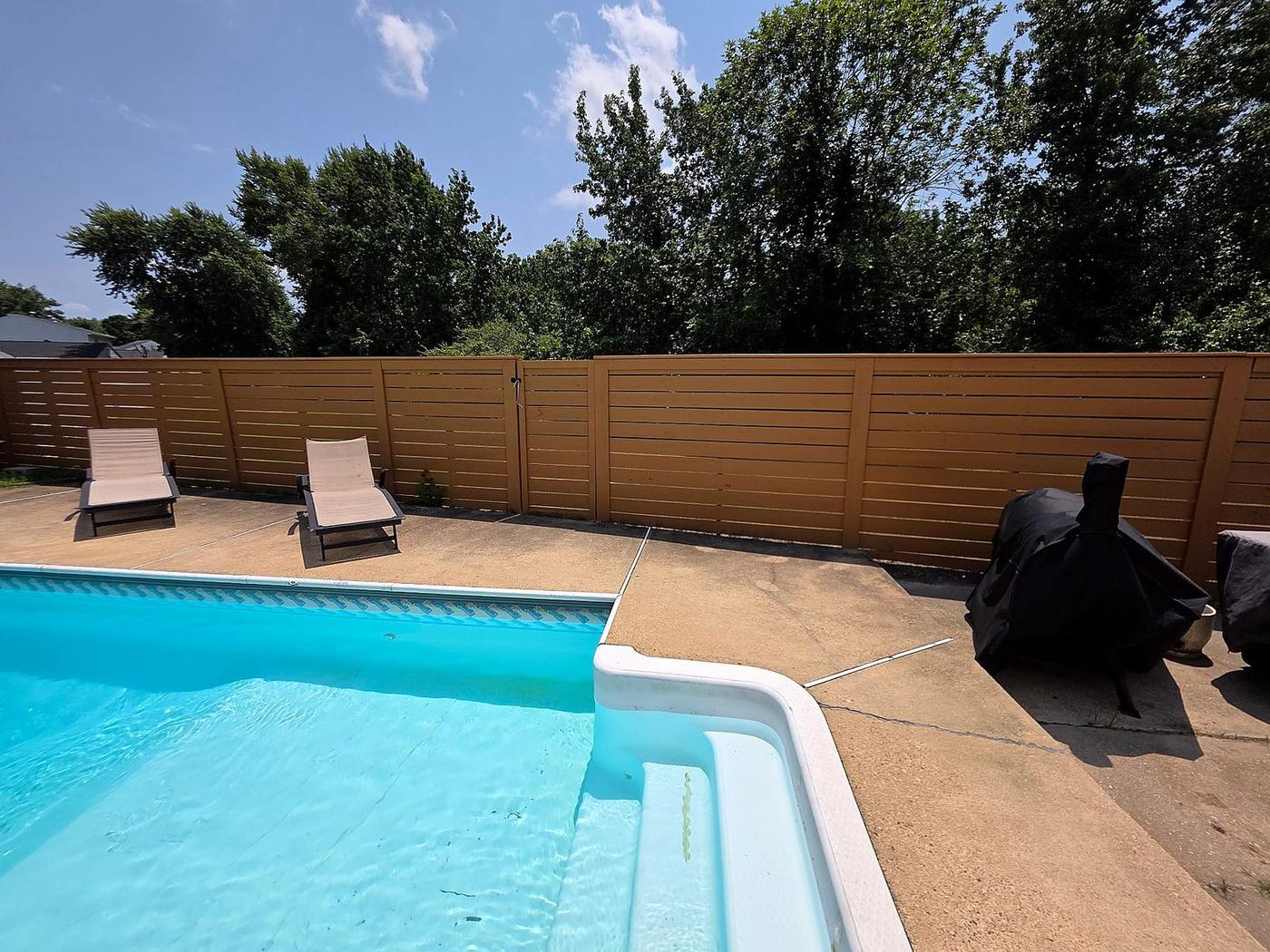
    Composite privacy fence installation beside residential pool deck and lounge area

    Why choose Divine Touch

    A fence sits outside every day in salt air, sandy soil, and whatever storms come through Hampton Roads, so the parts nobody sees, the footing depth, the concrete mix, the hardware grade, matter more than they do on a project that lives indoors. Divine Touch treats fence installation with the same discipline we bring to interior remodeling: we confirm the property line and HOA requirements before ordering material, we call in a Virginia 811 locate before digging, and we let concrete cure the right amount of time instead of rushing framing to hit a shorter schedule. As a veteran-owned, family-owned, bilingual contractor based in Virginia Beach, we walk the yard with you first, talk through gate widths and material honestly, and give you a written scope so there are no surprises about what is being built or when your yard will be back to normal.

    Schedule a Consultation

    Fence Services Project Gallery

    Horizontal wood privacy fence installed around backyard patio seating area in Hampton Roads VA
    View Project
    Composite privacy fence installation beside residential pool deck and lounge area
    View Project

    Privacy Fences, Backyard Fences, and Property-Line Fencing

    Most fence projects in Virginia Beach, Chesapeake, Norfolk, and Portsmouth start with one of three goals: more privacy from neighbors and the street, a safely enclosed backyard for kids and pets, or a clean, defined property line that simply makes the home feel finished. Divine Touch Home Improvements helps homeowners think through all three at once, because the right fence usually does more than one job. A taller privacy fence along the back of the lot, a shorter decorative section near the front, and a gate sized for a mower or trash cans is a very common combination, and we'll help you plan it in a way that looks intentional from every angle.

    We discuss layout, height, gate locations, post spacing, and how the fence will interact with existing landscaping, sheds, HVAC units, and driveways. Small decisions during planning, like which direction a gate swings or where to step a fence down a sloped yard, make a big difference in how the finished fence feels years later.

    Fence Repair, Section Replacement, and Storm Damage

    Not every fence problem requires a full replacement. After a strong Hampton Roads storm, we often see homes where only a few posts have snapped, a gate has sagged, or a section has blown over while the rest of the fence is still in good shape. In those cases we focus on fence repair: resetting posts, replacing damaged boards or panels, rehanging gates so they latch cleanly, and tightening up the sections that have started to lean.

    If the fence is past the point of useful repair, we'll tell you that too. Wood fences that are widely rotted at the base, leaning along most of the run, or missing large amounts of hardware are often better served by a planned fence replacement than by piecemeal repairs that will keep coming back. Either way, you'll get an honest read on the condition of what you have and a clear written quote for whatever path makes sense.

    Fencing as Part of a Bigger Exterior Plan

    A new fence rarely lives in isolation. It frames the yard, lines up with the house, and works with whatever landscaping, decks, patios, or outdoor structures are already in place, or are coming next. Because Divine Touch handles a broad range of exterior and interior home improvements, we can talk through fencing alongside other projects you may be considering, from exterior paint and trim to deck work, doors, and beyond. That coordination keeps everything looking like it belongs on the same home and helps avoid the awkward look of upgrades that don't quite match.

    If you're thinking about a new fence, a section replacement, or repairs after a recent storm, give us a call at (757) 731-4151 or request an estimate online. We'll come walk the property with you, listen to what you want the yard to feel like, and put together a clear plan in English or Spanish for what comes next.

    Fence installation across Hampton Roads

    We install and repair fences across all four cities we serve, and both HOA rules and coastal exposure vary enough between neighborhoods that we plan every layout on-site rather than assuming one approach fits every yard.

    • Fence installation in Virginia Beach

      Many neighborhoods here have active HOAs with specific fence height and material rules, and closer proximity to the Oceanfront means more direct salt air exposure on hardware and metal fencing.

    • Fence installation in Chesapeake

      Larger lots and a mix of newer subdivisions with HOAs alongside older rural-feeling properties mean fence layouts and gate needs vary widely from street to street.

    • Fence installation in Norfolk

      Smaller urban lots and older housing stock mean property lines are worth confirming carefully, and coastal exposure in low-lying areas can affect post setting and drainage.

    • Fence installation in Portsmouth

      Established neighborhoods with mature trees mean root systems come up more often during digging, and older fence lines sometimes sit on property boundaries worth re-checking before replacement.

    Frequently Asked Questions

    Do I need a permit or HOA approval for a new fence?

    Depending on height, location, and your city, a fence permit may be required, and if you belong to an HOA, most require architectural approval before you install anything. We talk through both with you during the initial walkthrough so material and layout decisions are not made twice.

    How do you handle property lines?

    We talk through where you believe the line sits and review any survey you have. If there is real uncertainty about an exact boundary, especially near a shared fence line with a neighbor, we recommend confirming with a licensed surveyor before we set posts, since moving a finished fence is far more disruptive than confirming the line up front.

    How long does a typical fence installation take?

    Once material is ordered and the Virginia 811 locate is cleared, most residential fence installations run from a few days to about a week of on-site work, depending on total linear footage, number of gates, and how much digging the soil and terrain require. Concrete cure time adds a pause between setting posts and framing.

    Why does concrete need to cure before you keep working?

    Concrete footings need real time to reach enough strength to hold a post plumb under the weight and wind load of framing, pickets, and gate hardware. Rushing this step risks posts leaning or shifting later, which is a much bigger fix than waiting a day or two during the original install.

    Which side of the fence should face my neighbor?

    Common practice is to face the finished side, rails and framing hidden, toward your own yard, so your neighbor sees the clean picket or panel face. Some HOAs specify this directly, and some neighborhoods split the difference by neighborhood custom, so we confirm expectations with you before framing.

    How wide should my gates be?

    A standard walk gate usually runs about three to four feet, wide enough for foot traffic and most equipment like a wheelbarrow. If you need to get a mower, trailer, or truck through, a wider double gate is worth planning for from the start, since retrofitting a wider opening later means rebuilding posts and framing.

    How much maintenance does a new fence need?

    Wood fences benefit from periodic sealing or staining to handle Hampton Roads humidity and sun exposure, especially on south and west facing runs. Vinyl, composite, and aluminum need little more than an occasional wash. Chain link holds up with minimal care unless it is bare steel near the coast, where a vinyl-coated option resists corrosion better.

    Can your team handle a fence estimate in Spanish?

    Yes. Our team communicates in English or Spanish from the first walkthrough through the final walkthrough, so language is never a barrier to understanding the property line conversation, material choices, or the schedule for your fence installation.
    Ready to Start Your Home Improvement Project?

    Talk to Carlos and the Divine Touch team about your kitchen, bathroom, or whole-home remodel. We'll listen, plan, and deliver quality craftsmanship you can trust.