
Flooring
LVP vs. Hardwood: Which Holds Up Better in Hampton Roads?
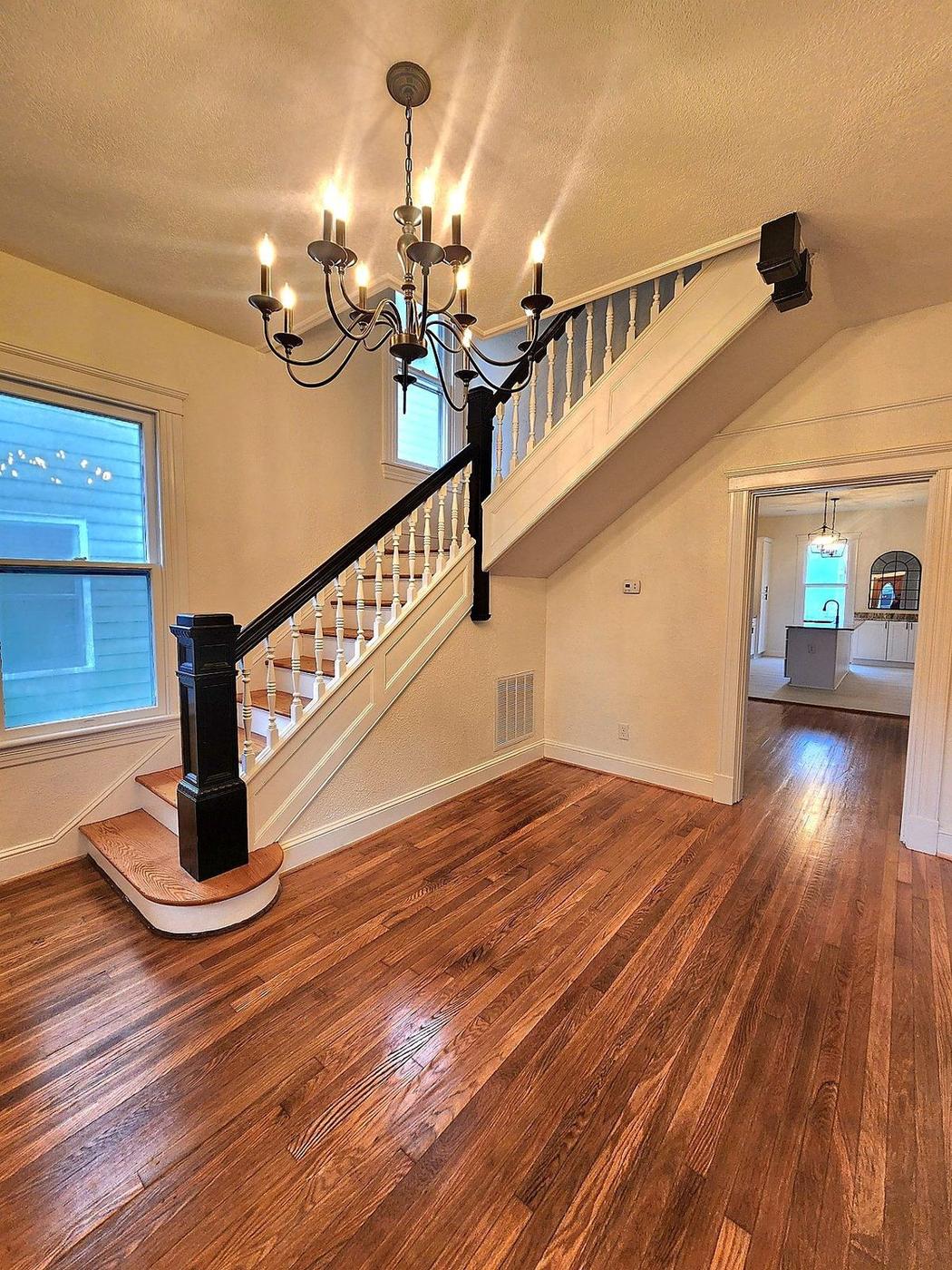
If the floor is on a ground level over a crawl space, or anywhere in a flood zone, install luxury vinyl plank. If it's upstairs in conditioned space and you want the floor to still be there in forty years, hardwood is worth the money.
That split isn't about taste or budget. It's about the fact that Norfolk sits at 68% relative humidity year-round, and the National Wood Flooring Association says wood floors perform best between 30% and 50%. Every national comparison guide you'll read was written somewhere that number isn't a problem.
Here it's the whole problem.
The Short Answer
| Go with LVP | Go with hardwood |
|---|---|
| Ground floor over a crawl space | Second floor over conditioned space |
| Anywhere in a FEMA flood zone | Homes outside the floodplain |
| Kitchens, bathrooms, laundry, mudrooms | Bedrooms, hallways, formal spaces |
| Rental or a house you'll sell in under five years | The house you plan to stay in |
| Dogs, kids, and a back door to a sandy yard | You want to refinish rather than replace |
| You want the job done in days, not weeks | You want the resale premium in an older neighborhood |
Most Hampton Roads homes end up with both — and that's usually the right answer, not a compromise.
Why the Answer Is Different Here
Wood is hygroscopic. It takes on moisture from the air and gives it back, swelling and shrinking as it goes. That's not a defect; it's what wood does, and floors are designed around it.
The design assumption is a fairly narrow band. The NWFA's guidance is that wood floors perform best when the interior environment stays in a relative humidity range of 30 to 50 percent and a temperature range of 60 to 80 degrees Fahrenheit.
Now look at what's actually outside your door. Norfolk's average relative humidity runs 68% across the year. It peaks at 74% in August. Its driest month, April, still sits at 62%.
Your HVAC pulls that down when it's running. But in the shoulder seasons — the stretch in April and October when nobody's running heat or air for weeks at a time — indoor humidity drifts toward outdoor humidity. That's when floors move.
None of this makes hardwood impossible here. Plenty of Hampton Roads homes have beautiful, stable hardwood. It means hardwood here needs things it doesn't need in Denver: real acclimation time, moisture testing before a single board goes down, and a house that stays conditioned year-round. Skip those and you get a callback in eighteen months.
Why So Many Floors Cup Here
Cupping is when the edges of each board rise higher than the center, so the floor develops a subtle washboard feel underfoot. Run your hand across it and you can feel the ridges before you can see them.
It happens when the underside of the board is wetter than the top. The bottom swells, the top doesn't, and the board curls.
In this region the moisture almost always comes from below, and the crawl space is the usual culprit. A vented crawl space in a coastal climate pulls humid summer air in under the house, where it hits cooler surfaces and condenses. That moisture goes into the subfloor, and the subfloor hands it to your flooring.
This is where the NWFA's other number matters. Before installation, the moisture content of the flooring and the subfloor need to be close: within 4% for strip flooring, within 2% for plank. Wide plank is less forgiving, which is unfortunate, because wide plank is what everyone wants right now.
A crew that shows up, opens the boxes, and starts nailing the same afternoon has skipped the only step that prevents this. On a Hampton Roads crawl-space home, we won't install hardwood until we've metered the subfloor — and if the number is wrong, the fix is the crawl space, not the floor.
What to check before you blame the floor:
- Does the crawl space have an intact ground vapor barrier, or bare dirt?
- Is there standing water after heavy rain?
- Are the foundation vents open in August?
- Has the HVAC been off for a long stretch?
- Is a dryer or bath fan venting into the crawl space instead of outside?
If you've got cupping and the crawl space is wet, replacing the floor without fixing the crawl space just buys you the same problem again in three years.
The Flood Math That Belongs in a Flooring Guide
Here's the part the Bay Area version of this article has no reason to include.
According to an NRDC analysis of federal flood insurance data, more than 5,000 homes in southeastern Virginia have received multiple federal flood insurance payouts — and about 74% of all of Virginia's repetitive-loss properties are right here in Hampton Roads. The region has more homes with multiple flood payouts than New York City. Roughly 12% of those qualify as severe repetitive loss, meaning four or more claims of at least $5,000 each.
If your house is one of them, or sits near one, that changes the flooring decision from an aesthetic question into a financial one.
Solid hardwood does not survive standing water. Once it's soaked from below and above, it cups, crowns, and separates, and it comes out.
LVP is better, but be careful how much better. The planks themselves are waterproof, and after a minor event they can sometimes be lifted, dried, and reinstalled. What fails is everything underneath. As one restoration outfit puts it plainly, "saving the visible flooring is not a successful outcome if moisture is left trapped beneath it" — attached padding and underlayment hold water against the subfloor, and a wood subfloor left wet will swell, weaken, and grow mold.
So the honest version is this: in a real flood, you're pulling the floor up either way. The difference is that with LVP you're often replacing underlayment and drying a subfloor, and with hardwood you're replacing the entire floor and probably some framing. On a repeat-loss property, that gap compounds every single time.
What Each One Actually Costs
Installed, nationally, the ranges land roughly here:
| Installed cost per sq ft | Lifespan | Refinishable | |
|---|---|---|---|
| Luxury vinyl plank | $4.50 – $12 | 15–25 years | No — replace |
| Engineered hardwood | Between the two | 25–40 years | Once or twice, depending on wear layer |
| Solid hardwood | $8 – $22, premium to $25 | 50+ years | Many times |
Hardwood generally runs 50% to 100% more than LVP on a comparable job.
Those are national ranges, not a quote. What your floor actually costs depends on subfloor condition, how much leveling it needs, whether we're pulling up old tile or carpet, stairs, transitions, and how much furniture has to move. Hampton Roads labor sits near the national middle, so the ranges are a reasonable starting point — but the subfloor is the variable that moves the number, and nobody can price that from a photo.
One thing worth knowing while you budget: new flooring installed over an existing subfloor doesn't require a permit in Virginia. The state building code exempts it. If the job involves moving walls or altering structure, that changes — our guide to Virginia remodeling permits covers where that line falls.
Where Hardwood Still Wins Here
It would be easy to read all of the above as "just install vinyl." That's not what we tell people.
Upstairs
Second floors in Hampton Roads homes sit above conditioned space, not a crawl space. The moisture problem largely goes away. Bedrooms and upstairs hallways are where hardwood performs the way it's supposed to.
Longevity
A solid hardwood floor sanded and refinished every fifteen or twenty years outlives three or four LVP installations. If you're staying in the house, the math eventually flips to hardwood even at twice the upfront cost.
Repairability
Gouge a hardwood floor and it sands out. Gouge LVP and you're replacing planks and hoping the dye lot still matches — which, three years later, it usually doesn't.
Resale in the right neighborhood
In older Norfolk and Portsmouth homes where original hardwood is part of what buyers are shopping for, vinyl on the main level can read as a downgrade. That's neighborhood-specific and worth thinking about honestly rather than assuming either way.
Refinishing what you already have
If your existing hardwood is structurally sound and just tired, refinishing costs a fraction of replacement. We'll tell you when that's the better call.
What We Actually Install, Floor by Floor
The way most of our Hampton Roads jobs end up:
- Ground floor over a crawl space — LVP, with the crawl space addressed first if it's wet. A rigid-core product with a thicker wear layer, not the bargain tier.
- Kitchens — LVP or tile, every time. A dishwasher fails eventually. When we're doing kitchen remodeling, the flooring decision gets made alongside cabinet layout, not after.
- Bathrooms — tile or LVP. Never hardwood. In a bathroom remodel the waterproofing under the finish is what matters most anyway.
- Second floor — hardwood or engineered, if the budget's there.
- Anywhere in a flood zone — LVP, and we'll talk about what goes under it as carefully as what goes on top.
- Whole house at once — in a full home renovation we'll usually run one LVP product across the main level for continuity and put hardwood upstairs.
We install flooring across Virginia Beach, Chesapeake, Norfolk, and Portsmouth, and we've seen what each of those housing stocks does to a floor.
Picking a Floor for Your Home
Divine Touch Home Improvements is a family-owned, veteran-owned, minority-owned remodeling contractor based in Virginia Beach, serving Virginia Beach, Chesapeake, Norfolk, and Portsmouth in English and Spanish.
Our flooring services cover hardwood, engineered, LVP, tile, and laminate — and we'll meter your subfloor before we recommend anything, because in this climate that's the part that decides whether the floor lasts. Request a time and we'll come walk the space, or call (757) 731-4151.