
Permits & Planning
Do You Need a Permit to Build a Fence in Virginia Beach?
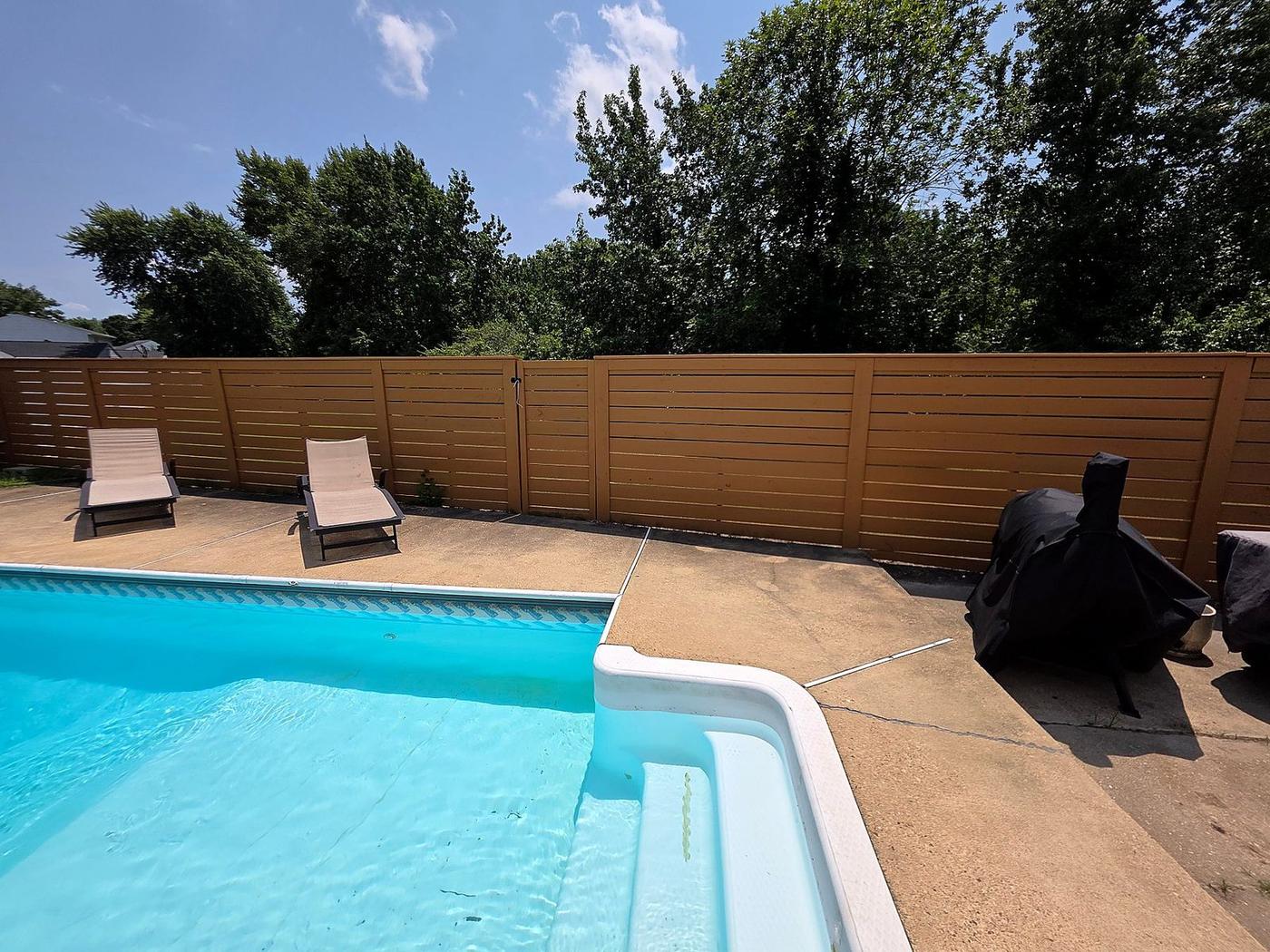
In Virginia Beach, whether you need a fence permit has almost nothing to do with how tall the fence is. It depends on how close the fence sits to a public right-of-way. If any part of it lands within thirty feet of one, you need a zoning permit before the first post goes in the ground. If the whole fence sits farther back than that, you generally do not, though the height and material rules still apply either way.
That one distinction catches more homeowners than any other part of the process, because almost every guide online talks about fence height instead. A pool fence is a separate matter again, and it needs a building permit rather than a zoning permit.
Divine Touch Home Improvements is based in Virginia Beach and has served homeowners across Virginia Beach, Chesapeake, Norfolk and Portsmouth since 2019. This is a plain-language walk through what the city actually asks for, what it costs, and the three approvals that are not the city's permit at all.
The Short Answer
Here is where most Virginia Beach fence projects land. Each row is explained below.
| Your situation | What Virginia Beach requires |
|---|---|
| Any part of the fence within 30 feet of a public right-of-way | A zoning fence permit, $61 |
| Entire fence more than 30 feet from a right-of-way | No zoning fence permit, but height and material rules still apply |
| Fence enclosing a pool or spa | A building permit, separate from any zoning permit |
| Fence sitting in an easement | Permission from whoever controls the easement, on top of the city permit |
| Replacing an existing fence in the same spot, within 30 feet of the right-of-way | Still a permit. Replacement and relocation both count. |
That last row surprises people. The ordinance covers construction, reconstruction, replacement and relocation, so swapping a rotted fence for a new one on the same line is not automatically exempt.
The 30-Foot Rule Is the Part People Miss
Section 201 of the City Zoning Ordinance is what governs fences in Virginia Beach, and the city's own Fence and Wall Bulletin states the trigger directly: a permit is required for the construction, reconstruction, replacement or relocation of any fence or wall located within thirty feet of a public right-of-way. Fences used principally for agricultural or horticultural purposes in an AG Agricultural district are the exception.
The right-of-way is not the same thing as the curb, and it is usually not the same thing as the edge of your grass. It is a line on your plat, and on many Virginia Beach streets it sits several feet inside the sidewalk. This is why the city wants a survey rather than your own measurement, and it is why a fence you were sure was well clear of the road sometimes is not.
A back-corner fence on a deep interior lot often falls outside the thirty feet. A front yard fence almost never does. On a corner lot, the fence runs along two street frontages, so a larger share of it is in play.
How Tall Your Fence Can Be
Height in Virginia Beach is tied to where the fence sits on the lot, not to a single number for the whole property. The front yard is the restricted zone, and the restriction lifts once you are past the front setback for your zoning district.
- Front yard, before the setback: 4 feet maximum. Beyond ten feet from the right-of-way or property line, no landscaping is required. Within ten feet, the same 4-foot limit applies and Category I landscaping is required.
- Past the front setback: fences over 4 feet and up to 8 feet are allowed. The front setback itself runs anywhere from 20 to 50 feet depending on your zoning district, which is why two houses on the same street can get different answers.
- Rear yard: up to 8 feet. Again, Category I landscaping is required if the fence is within ten feet of the right-of-way line.
- Corner lots: the side yard adjacent to a street has its own setback, generally 15 to 30 feet, and up to an 8-foot fence is allowed once that setback is reached. Closer in, 4 feet with Category I landscaping applies, with a 6-foot allowance in some positions.
- Gates: rear yard fences adjacent to a street are required to have a gate.
Because the setback varies by district, the honest answer to "how tall can my fence be" always starts with your zoning district and your survey. The Zoning Office takes these questions directly at 757-385-8074, and they would much rather answer before the fence goes up than after.
What the $61 Permit Actually Takes
The fee is $61. The paperwork is the part worth planning for, and it is where most do-it-yourself fence projects stall.
- A sealed survey or site plan. The city asks for a current physical survey or site plan showing all existing and proposed fencing, sealed by a Virginia registered design professional, meaning a surveyor, architect or engineer. If you do not already have a sealed plat from your closing, this is the long pole in the project.
- Fence details on that plan. Height, any required landscaping, and a list of materials.
- An eligible applicant. Zoning-issued fence permits go only to the property owner or to Virginia licensed contractors. There is no third option, which is a quiet but useful filter on who you hire.
- One permit per lot. A fence crossing more than one lot needs a separate permit for each, unless the lots are under common ownership.
Two things that are not required: there is no inspection on a zoning fence permit, and there is no waiting on an inspector at the end. The city's check happens up front, on the plan.
A Pool Fence Is a Building Permit, Not a Zoning Permit
This is the exception that catches people who have already read everything else about fence permits, and it is worth stating plainly: in Virginia Beach, all property owners must obtain a building permit to install swimming pools and barriers. The fence around the pool is the barrier. It is reviewed as a safety structure, not as a zoning matter, and the city has a Pool Barrier Affidavit that goes with it.
The practical consequence is that a pool fence can need a building permit even where the same fence in the same spot would not have needed a zoning permit, because it sits well back from the road. The two permits answer different questions. One asks where the fence is. The other asks whether it will keep a child out of the water.
If you are enclosing a pool, treat the barrier requirements as the design constraint and work the appearance around them, rather than the other way around. Gate hardware, latch height and the gaps between boards are all part of what makes a barrier a barrier.
Chain Link, Vinyl and the Finished-Side Rule
Virginia Beach regulates what the fence is made of and which way it faces, not just where it stands.
- The finished side faces the street. Fencing shall have the finished side facing the right-of-way. The neighbors get the good side, and so does the city.
- Chain link needs landscaping. Chain link is allowed, but Category I landscaping has to be installed between the entire length of the fence and any public right-of-way.
- Vinyl and aluminum get a break. Materials recognized industry-wide as maintenance-free, such as vinyl and aluminum, may be located right on the right-of-way line, provided Category I landscaping is installed immediately inside the entire length of the fence, the height limits are met, and the fence is no more than 50 percent opaque.
- Barbed wire and electric fencing are out. Both are prohibited in residential, apartment and many other districts.
That 50 percent opacity rule is the reason a solid privacy fence cannot simply be moved forward to the property line, no matter what it is made of. If you want privacy and you want it near the road, the height limit and the opacity limit will both be working against you, and it is better to find that out while the design is still on paper.
Four Cities, Four Sets of Rules
Hampton Roads cities share a state building code, but fences are mostly a zoning matter, and zoning is local. We work in all four, and they genuinely differ.
| City | What is distinctive |
|---|---|
| Virginia Beach | Permit if within 30 feet of a right-of-way. $61. 4 feet in the front yard, up to 8 feet past the setback. Sealed survey required. |
| Chesapeake | Permit to install or replace more than 8 linear feet of fencing, applied for through eBUILD. Maximum 6 feet on interior property lines, 4 feet between the house and any street. Pool barriers are a separate building fence permit. |
| Norfolk | A front yard fence that is at least 50 percent open, such as chain link, wrought iron or picket, may be up to 4 feet. Side yards allow up to a 6-foot solid fence. On a corner lot the fence adjacent to the road may reach 6 feet but must be 50 percent open. Zoning answers at 757-664-6588. |
| Portsmouth | Permits and Inspections handles the permit, and Code Enforcement also runs zoning inspections. If you are in a Historic Preservation District or a Downtown Design District, exterior work needs advance approval on top of the permit. |
Chesapeake's eight-foot rule is the one worth knowing if you are patching rather than replacing. A short repair section can fall under the threshold where a longer run of the same fence would not.
If your project is in one of the other three cities, our Chesapeake, Norfolk and Portsmouth pages cover how we work in each.
The Three Approvals the City Permit Does Not Cover
A city permit is permission from the city. It is not permission from everyone, and these three are where fence projects most often come apart after the permit is already in hand.
- Easements. If the fence sits in an easement, you may need approval from whoever controls it. That can be a homeowners association, a condominium association, a utility company, or a city department such as Public Works or Public Utilities. The city is explicit that getting those approvals is the property owner's or permit holder's responsibility, not the city's.
- Your HOA. An HOA can be stricter than the city on height, material, color and setback, and plenty of them are. The city will not check your covenants for you. Approval from one does not imply approval from the other, and the HOA review usually takes longer than the permit.
- Miss Utility. Call 811 or 1-800-552-7001 before digging. They locate and mark underground utility lines free of charge. Fence posts go deep enough to find things, and hitting a line is both a safety problem and a bill.
If your fence will sit in a drainage or impoundment easement, expect extra paperwork. Chesapeake, for instance, has a specific owner acknowledgment form for fences in a city drainage easement.
What Happens If You Skip It
A fence is not hidden inside a wall. That is what makes an unpermitted one a different kind of problem from unpermitted electrical: anyone can see it from the street, including a neighbor with a complaint and a buyer's agent with a checklist.
The costs show up in a few predictable places:
- Moving or shortening it. A fence built too tall or too close to the right-of-way can be required to come down or be rebuilt to the correct height. The materials are rarely the expensive part. The labor twice over is.
- At resale. Visible exterior work without a permit history invites questions, a price reduction, or a demand to permit it retroactively, which means proving after the fact that what is already built complies.
- Pool barriers specifically. Here the exposure is not only financial. A barrier that was never reviewed is a liability question as much as a code question, and it is the one case in this article where we would tell you to stop and fix it immediately.
- On the next project. Unpermitted work found during a later permitted job has to be resolved before the new work gets approved.
Planning a Fence in Hampton Roads?
Divine Touch Home Improvements is a family-owned, veteran-owned and minority-owned contractor based in Virginia Beach, working in English and Spanish across Virginia Beach, Chesapeake, Norfolk and Portsmouth.
We pull the permit as part of the job. Before you commit to anything, you get a written scope that says which permit your fence needs, what it costs, and where the fence will actually sit relative to your property line and the right-of-way. If your survey is the missing piece, we will tell you that at the estimate rather than three weeks in.
See our fence services, read our guide to remodeling permits in Virginia if you have a larger project in mind, or request an estimate time and we will confirm within one business day. You can also call (757) 731-4151.