
Flooring
LVP vs. Hardwood vs. Tile: Flooring for Coastal Virginia Beach Homes
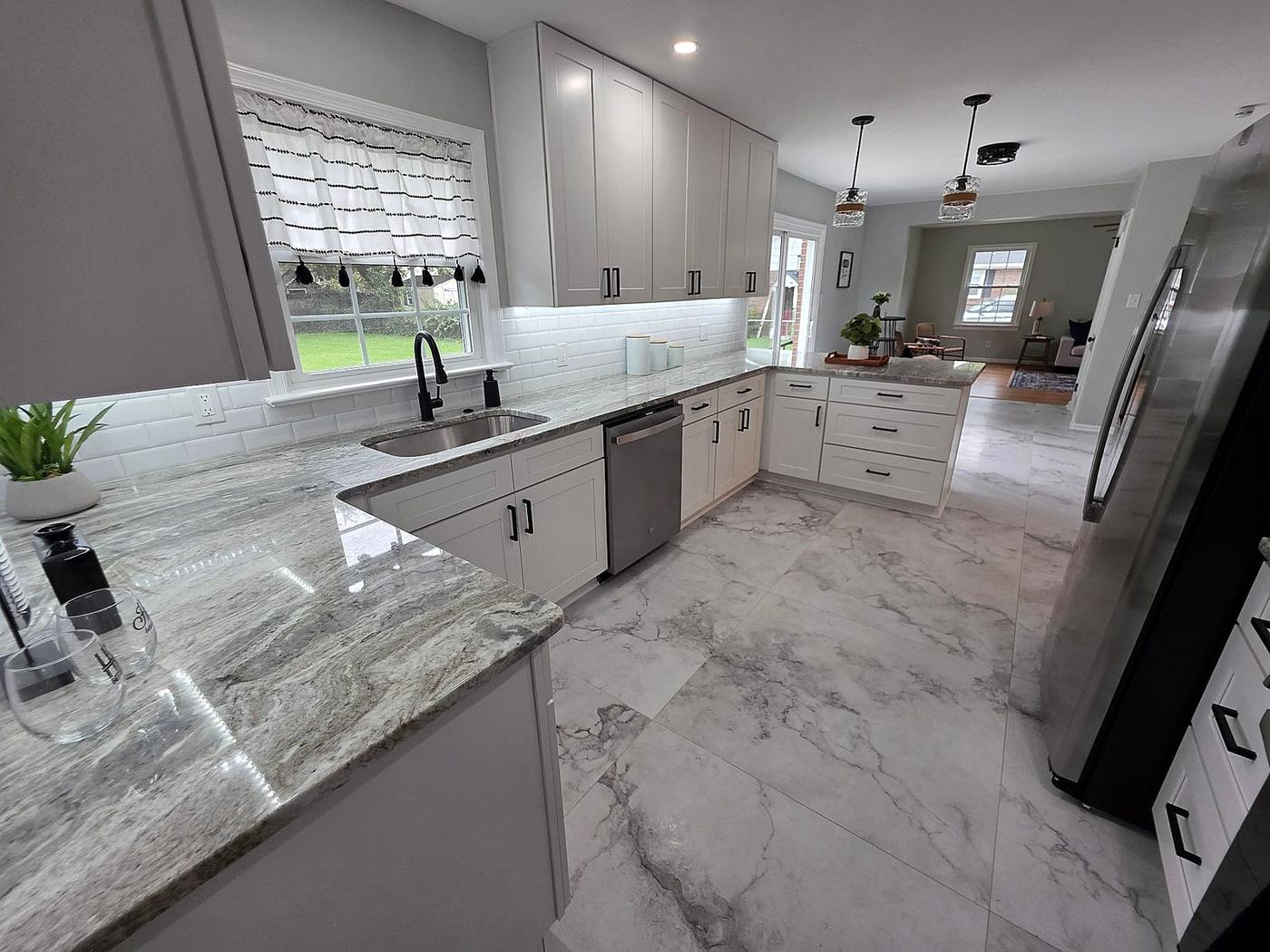
If you live within a few miles of the water in Virginia Beach, your floors take a different kind of beating than floors inland. Sand rides in on shoes, paws and beach bags. Kids walk straight from the pool or the shore to the kitchen. Salt air finds its way through every door that opens in summer. Picking a floor here is less about what looks good in a showroom and more about what still looks good after a few beach seasons.
At Divine Touch Home Improvements, we have been installing floors across Virginia Beach, Chesapeake, Norfolk and Portsmouth since 2019. The three materials homeowners ask us about most are luxury vinyl plank, hardwood and porcelain or ceramic tile. Each one can be the right answer. Each one can also be the wrong answer in the wrong room. This guide walks through how they compare for a coastal home, and which floor tends to fit which space.
If you mainly want the deeper humidity and flood comparison between vinyl plank and wood, we covered that in our LVP vs. hardwood guide for Hampton Roads. This post adds tile to the conversation and focuses on what the coast itself does to a floor: salt, sand and water at the door.
The Short Answer
Here is how the three floors stack up on the things that matter most near the beach. The sections below explain each row.
| Luxury vinyl plank | Hardwood (solid or engineered) | Porcelain or ceramic tile | |
|---|---|---|---|
| Moisture | Waterproof surface, handles spills and wet feet well | Most sensitive to standing water and damp air | Unaffected by water; grout needs sealing |
| Sand and scratching | Depends on wear layer; fine scratches can show | Scratches and dents most easily | Hardest surface; grout lines collect grit |
| Comfort | Warm and soft underfoot, quiet | Warm, natural feel | Hard and cool underfoot |
| Repairs | Single planks can often be replaced | Can be sanded and refinished | Cracked tiles can be swapped if spares are kept |
| Best rooms | Kitchens, living areas, bedrooms, most of the house | Living and dining rooms, bedrooms away from entries | Entries, mudrooms, bathrooms, laundry, sunrooms |
Salt Air and Humidity Near the Water
Luxury vinyl plank does not care much about damp air. The surface is waterproof and the core is built to stay stable through the swings we get between a muggy August and a dry January. Its weak spot is the edges and the subfloor underneath, which still need to be dry and flat when it goes in.
Hardwood is a natural material, so it reacts to the air around it. Engineered hardwood, with a real wood top over a layered base, is noticeably more stable than solid boards, which is why we lean toward engineered in most coastal homes when a client wants wood. Either type needs steady indoor conditions to look its best.
Tile is the one floor that simply ignores humidity and salt. Porcelain in particular is dense and absorbs very little. The part to watch is the grout, which should be sealed so salt residue and moisture do not soak in and stain it.
Sand and Grit: The Real Floor Killer at the Beach
Most people worry about water. In our experience, sand does more visible damage to floors near the oceanfront than anything else. Fine sand acts like sandpaper under shoes and chair legs, and it builds up fast in entries and kitchens.
On LVP, the protective top coating, called the wear layer, is what takes the abuse. A thicker wear layer holds up better to grit, so for beach houses we steer clients toward the heavier commercial or premium lines instead of the thinnest builder-grade plank. Light textured or wood-grain finishes also hide fine scratches better than glossy, solid-color planks.
Hardwood shows sand damage the fastest. Softer species and dark, shiny finishes will scuff in high-traffic paths. The good news is that wood can be sanded and refinished later, which LVP cannot.
Tile shrugs off sand on the surface, which is why it works so well at entries. What sand does to tile is fill the grout lines. Narrow grout joints, larger tile formats and a darker or stain-resistant grout make cleaning much easier.
Wet Feet, Pools and Beach Traffic at the Door
The first few feet inside a back door, a garage entry or a door off the pool deck see the worst conditions in a coastal house: wet feet, dripping towels, coolers and sand all at once.
This is where we most often recommend tile. A textured porcelain with good slip resistance is safer for wet feet than a smooth glazed tile, and it will not be harmed by puddles. If the rest of the main floor is LVP or wood, a clean transition at a doorway or a tiled landing zone keeps the look tidy.
LVP is a reasonable second choice at entries, since water on the surface will not hurt it. Just wipe up standing water so it does not sit along the seams. We generally keep solid hardwood out of these spots.
Slab Homes vs. Crawl Space Homes
What is under the floor matters as much as the floor itself. Many newer Virginia Beach and Chesapeake homes sit on a concrete slab, while plenty of older homes in Norfolk, Portsmouth and the beach neighborhoods sit over a crawl space.
On a slab, tile and LVP are both natural fits. Engineered hardwood can work too with the right moisture barrier, while solid hardwood is usually not a good match for concrete at grade.
Over a crawl space, the condition of that space drives the decision. A damp, poorly vented crawl space pushes moisture up into the subfloor, which is hard on wood and can affect the base under any floor. Tile over a wood subfloor also needs the floor to be stiff enough to avoid cracked tiles and grout. During our visit we check the subfloor for soft spots and signs of moisture before recommending a material.
Which Floor Fits Which Room
- Entries, mudrooms and doors to the pool or beach: textured porcelain tile first, LVP second.
- Bathrooms and laundry rooms: tile, or a quality waterproof LVP in secondary baths.
- Kitchens: LVP for comfort and a continuous look, or tile if the kitchen opens right onto a back door.
- Living and dining rooms: LVP or engineered hardwood, depending on how much beach traffic passes through.
- Bedrooms: LVP or hardwood for warmth and quiet.
- Sunrooms and enclosed porches: tile, since these rooms see the biggest swings in temperature and moisture.
What Drives the Cost
In general, LVP is the most budget-friendly of the three to install, engineered hardwood and tile tend to land higher, and solid hardwood or large-format tile with a detailed layout usually costs the most. The material is only part of the price, though. These factors often move the total more than the flooring itself:
- Subfloor prep: leveling a slab or stiffening and repairing a wood subfloor.
- Tear-out: removing old tile or glued-down flooring takes more labor than pulling carpet.
- Tile format and layout: large tiles, herringbone or diagonal patterns and more cuts add time.
- Stairs: each tread and riser is detailed work, whichever material you choose.
How Divine Touch Can Help
We are a veteran-owned, family-owned and minority-owned company based in Virginia Beach, and we work in English and Spanish. When we visit, we look at how your household actually uses each room, check the subfloor and any crawl space, and talk through LVP, hardwood and tile side by side. You get a written scope with no pressure to decide on the spot.
Learn more about our flooring services, or request an estimate time and we will confirm within one business day. Prefer to talk first? Call (757) 731-4151.